
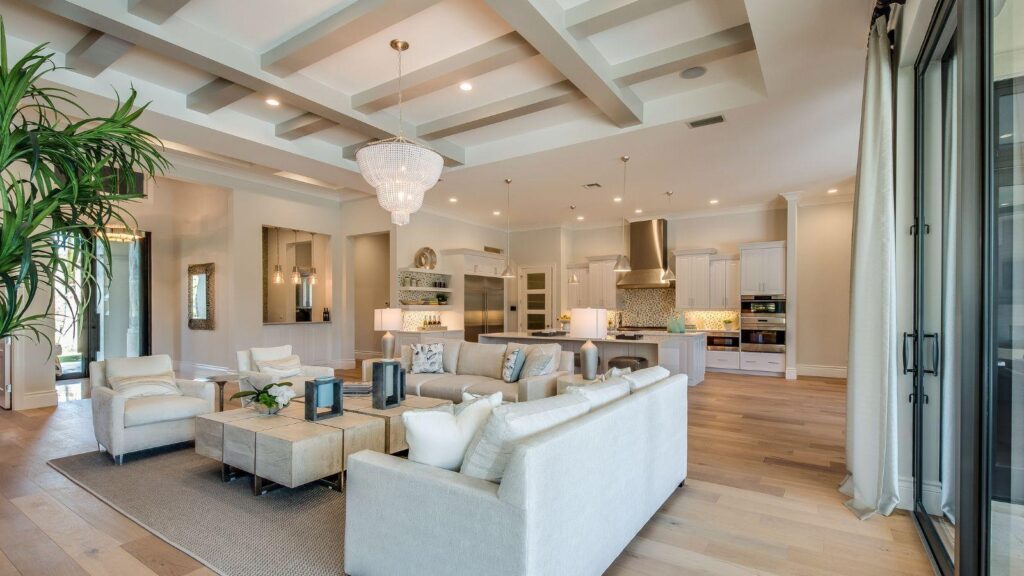
Your living area often shapes a buyer’s first impression because it shows how the home feels in everyday use. Before an open home, your goal is not to completely redesign the space, but to make it feel clean, balanced, spacious and easy to imagine living in. A few practical styling decisions can help you highlight the room’s strengths while reducing distractions that may affect how buyers respond.
1. Remove Visual Clutter First
Clutter can make your living area feel smaller and less organised, even when the room has good proportions. Start by removing excess cushions, personal photos, magazines, toys, visible cables and small decorative items that do not add structure to the space. Clear surfaces help buyers notice natural light, flooring, wall space and layout instead of focusing on personal belongings.
A simplified room also photographs better for listings and marketing. When there are fewer competing elements, the eye can move more easily through the space, helping your living area feel calmer and more open. If you want to stage your home yourself, start by taking away items that make the room feel crowded before adding anything new, as this often has the biggest immediate impact.
2. Improve Furniture Placement
Furniture placement affects how people move through your living area during an open home. Your sofa, armchairs and coffee table should create a clear path from the entry point through to adjoining rooms, balconies or outdoor areas. Blocking walkways, windows or doors can make the room feel awkward, even if the furniture pieces are attractive.
Aim to create a simple conversation zone that feels natural and proportionate. In smaller living rooms, pulling furniture slightly away from walls can sometimes make the space feel more considered, while oversized pieces may need to be removed or replaced with lighter-scale furniture. The right arrangement helps buyers understand the room’s function without needing explanation.
3. Refresh Soft Furnishings
Soft furnishings can quickly change the feel of your living area without requiring major work. Cushions, throws, rugs, and curtains help add warmth, texture and comfort, especially in rooms that otherwise feel plain or cold. Choose pieces that support your existing colour palette rather than introducing too many competing tones.
A good rule is to keep the base neutral and add limited contrast through texture or subtle colour. A rug can help define your seating area, while fresh cushions can make older furniture appear more polished. In property styling, visual balance matters because buyers often respond to the overall impression before they notice individual items.
4. Maximise Light And Space
Light strongly influences how buyers perceive your living area. Open curtains or blinds fully before inspections, clean windows, and remove anything that blocks natural light. Dark corners can be softened with floor lamps or table lamps, especially in homes where the living space does not receive strong daylight.
Mirrors can also help reflect light and create a sense of depth when placed carefully. Avoid overfilling the room in an attempt to make it feel styled. Negative space is useful because it allows architectural features, outlooks and proportions to stand out. A room that feels bright and breathable is often easier for buyers to connect with.
5. Add Simple Finishing Details
Finishing details should support your living area rather than dominate it. Fresh flowers, a ceramic bowl, a stack of books or a simple artwork can make the room feel complete without looking overly staged. Keep decorative choices restrained so the space remains broadly appealing to different buyer preferences.
Pay attention to small maintenance details as well. Marks on walls, worn lampshades, loose cushions and dusty surfaces can weaken the overall impression. Buyers may not consciously note every issue, but they often sense when a room feels neglected. Clean, deliberate finishing helps communicate care and readiness.
Create A Space Buyers Can Picture
Refreshing your living area before an open home is about clarity, comfort and proportion. Removing clutter, improving layout, updating soft furnishings, increasing light and adding simple finishing touches can make the room feel more inviting without unnecessary expense. When each choice helps buyers understand the space more easily, your living area becomes a stronger part of the home’s overall presentation.