
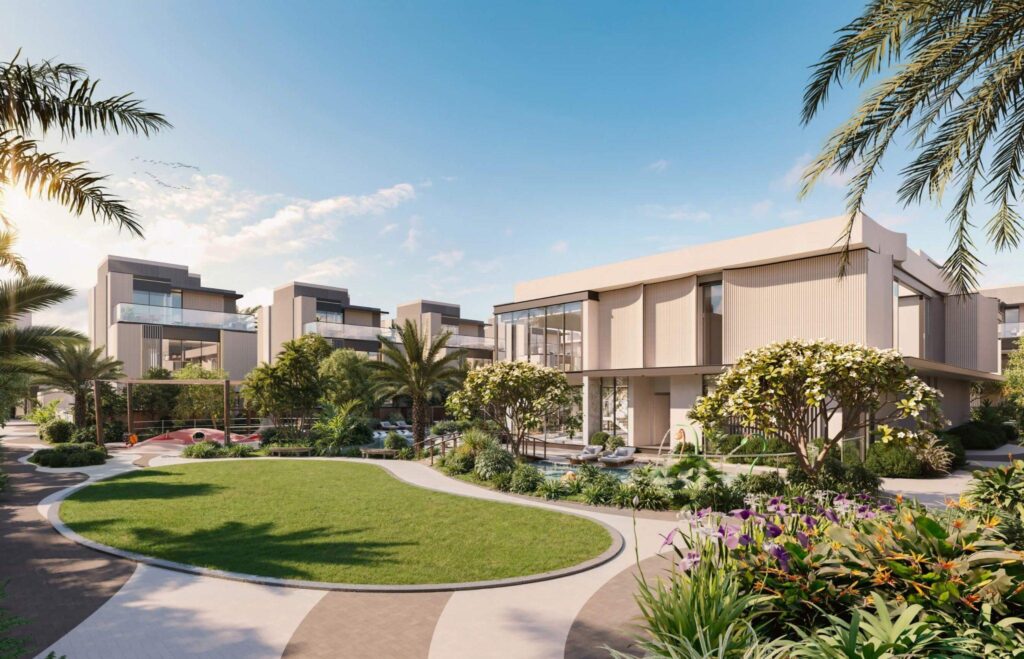
Dubai’s real estate market continues to shift toward low-rise living, and 2026 is turning into one of the more active years yet for townhouse launches and handovers. Where the city’s early growth cycles were dominated by high-rise apartment towers, developers are now racing to meet demand for homes with private gardens, dedicated parking, and space that suits families and remote workers alike. For anyone weighing a purchase in this segment, understanding which communities are moving through construction and handover in 2026 is a useful starting point.
This shift is not limited to one type of buyer either. End users relocating for work, families upgrading from a two-bedroom apartment, and overseas investors looking for rental-friendly assets are all competing for a similar pool of low-rise stock, which helps explain why so many new communities are launching in parallel this year rather than in a single wave.
Why Townhouses Are Having a Moment
The appeal is straightforward. Townhouses sit in a comfortable middle ground between an apartment and a villa: more room than a typical flat, without the price tag or maintenance load of a standalone villa. Many buyers moving to Dubai with children, or upgrading from an apartment, are drawn to the combination of a private entrance, a small garden or terrace, and access to shared community amenities like parks, pools, and retail. Hybrid and remote work have only reinforced this, with home offices and multi-generational living becoming standard requirements rather than nice-to-haves.
Developers have responded accordingly. Industry analysis of Dubai’s residential pipeline shows townhouses and villas making up a growing share of new supply through 2026 and beyond, with a small group of large-scale developers concentrating a significant portion of their upcoming launches in this category rather than in high-rise apartments.
Communities Moving Through 2026
A handful of masterplans stand out for buyers tracking the market this year.
DAMAC Lagoons continues its phased rollout, with the Monte Carlo and Morocco clusters both progressing toward handover in 2026. Each cluster carries its own architectural theme, and both are adding a fresh batch of townhouses and villas to what is already one of Dubai’s largest low-rise masterplans.
Dubai South’s flagship community, South Bay, is also gathering momentum. Built around a large lagoon with a waterfront promenade, it has positioned itself as a family-oriented option in a part of the city that is expanding quickly around the Al Maktoum International Airport corridor.
In Meraas’ Nad Al Sheba Gardens, the draw is location rather than scale. Sitting closer to Downtown Dubai than most emerging townhouse communities, it takes a more contemporary, minimalist design approach, with narrow lanes and curated greenery giving it a boutique, private neighbourhood feel.
Further out, Dubailand continues to fill in with new townhouse and villa launches aimed at families and mid-term investors, offering more accessible entry points than the established central communities.
Emaar’s The Valley remains one of the more talked-about family communities in this cycle, anchored by large recreational amenities including a dedicated beach and kids’ play area, and continues to add phases as demand holds up.
Newer entrants are also worth watching. Damac Islands has expanded into a second phase, adding further townhouse and villa clusters along its themed waterfront layout, while Al Furjan’s position close to Expo City and its existing metro connectivity continues to attract buyers looking for a mix of ready and off-plan townhouse stock in a more established part of the city. Between them, these communities give buyers a genuine range of price points and delivery timelines to weigh against one another rather than a single dominant option.
How These Compare to Dubai’s Established Low-Rise Communities
None of this is happening in a vacuum. Buyers evaluating a new launch naturally compare it to Dubai’s proven townhouse and villa neighbourhoods, places like Arabian Ranches, Dubai Hills Estate, and Al Furjan, all of which were master-planned with schools, retail, and green space built in from the start rather than added later. These established communities offer something the newer launches cannot yet match: a resale track record and a settled neighbourhood with schools and retail already operating. What the newer communities offer in return is earlier-stage pricing and, in several cases, more contemporary layouts designed around how families actually live today.
What to Look For in a New Community
With so many options launching in parallel, a few factors tend to separate a strong long-term purchase from a speculative one:
Connectivity. Proximity to major road networks and, increasingly, planned metro extensions matters more for resale value than it did five years ago.
Developer track record. A masterplan is only as good as its delivery history. Communities from developers with a consistent record of handing over on time and maintaining shared facilities tend to hold value better over time.
Layout and privacy. Townhouse products vary widely. Some are built in dense rows with shared walls on both sides, while others prioritise larger plots and more separation between units.
Amenities that are actually built. Renders showing parks, pools, and retail are common at launch. It is worth checking which phases of a masterplan already have those amenities operating versus planned for a later stage.
Community maturity. A townhouse bought in the first phase of a masterplan often sits alongside an active construction site for a year or more. Buyers who prioritise a settled, landscaped environment from day one may be better served by a community that is already partway through handover rather than one that has just broken ground.
Where Design-Led Developers Fit In
Alongside the larger masterplan players, Dubai’s townhouse segment has also drawn boutique, design-focused developers building smaller, more curated collections rather than sprawling multi-phase communities. Ellington Properties is one of them, known for weaving flexible layouts, landscaped communal spaces, and design detail into its residential projects rather than treating townhouses as a standardised product line. Buyers researching townhouses for sale in UAE will find this design-led approach positioned as an alternative to the larger volume launches dominating headlines this year.
The 2026 Market Outlook
Dubai’s townhouse segment is unlikely to slow down through the rest of 2026. With several large-scale developers concentrating new supply in this category and established communities continuing to mature, buyers have more genuine choice than at almost any point in the market’s recent history. The practical task is separating a well-located, well-delivered community from one that is simply riding the current wave of demand, and that comes down to the same fundamentals it always has: location, developer track record, and how well the plans on paper match what actually gets built.
For buyers narrowing down a shortlist, the most useful exercise is often a straightforward site visit across two or three communities in the same price bracket. Renders and masterplan brochures tend to look similar on paper; walking a completed phase, checking how far amenities are from a given plot, and asking how many units in that cluster have already changed hands tends to surface the differences that matter most once the keys are handed over.