
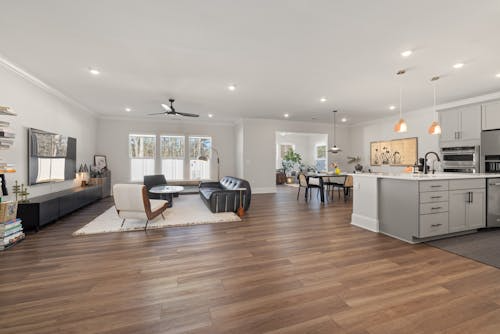
Not long ago, knocking down walls was the dream. The bigger and more open, the better. Kitchens flowed into living rooms, dining areas disappeared, and everyone called it modern. That design wave shaped home building for years. Now? Things are shifting. Buyers are asking different questions before they sign on the dotted line, and what they want from their homes has quietly changed.
Why Open Floor Plans Got So Popular
Open floor plans took off in the early 2000s and never really looked back until recently. They were tied to a certain lifestyle idea: casual, social, connected. A parent cooking dinner while keeping an eye on the kids doing homework. Guests mingling freely without being funneled into separate rooms. It felt effortless and modern at the same time.
Architecturally, open layouts also made smaller homes feel bigger. Removing interior walls created a sense of space that square footage alone couldn’t deliver. Real estate listings leaned hard into phrases like open concept because buyers responded to it during home tours. Light traveled further. Rooms felt airier. It was easy to see the appeal.
Developers caught on fast. New construction homes in the 2000s and 2010s were almost universally built around this layout. It reduced framing costs slightly and matched buyer expectations at the time. For a while, it was nearly impossible to find a newly built home that kept walls between the kitchen and living area.
|
68% Of the new homes in 2015, featured open layouts |
41% As of 2024, buyers now prefer defined rooms |
3x rise in home office searches since 2020 |
Real Wish List: What Today’s Home Buyers Want
Across markets in Delaware, buyer conversations have shifted noticeably. People still appreciate a connected feel in social spaces, though they’re no longer willing to sacrifice every room for it. They want a kitchen that flows into a living area, yes, but they also want a proper office, a quiet bedroom that doesn’t pick up every kitchen noise, and storage that actually makes sense, which is exactly what many Delaware Home Buyers are now prioritizing when evaluating properties.
The pandemic played a significant role here. When homes became workplaces, classrooms, and gyms all at once, the home environment forms the cornerstone of your family’s physical and mental well-being. The open floor plan showed its limits. Sound carries freely with no walls to stop it. Zoom calls clashed with kitchen noise. Kids studying needed separation from adults working. That experience left a lasting impression, and buyers haven’t forgotten it.
“People want openness where it counts, living and dining, but they want walls back where they need focus or rest.”
Rooms That Work Hard
Functional living is really about rooms earning their place. A dedicated home office with a door that closes. A mudroom that handles real life: backpacks, shoes, dog leashes. A kitchen with enough separation that cooking smells don’t drift into the bedroom hallway. These are the things buyers now bring up in their first conversations with agents.
This shift also shows up in how people are renovating existing homes. Instead of opening up walls as they would have ten years ago, homeowners are adding them back. Partial walls, glass partitions, and pocket doors have become popular because they offer a middle ground, some separation without fully closing off a space.
|
Open Floor Plan
|
Functional Layout (Trending)
|
Kids, Pets, and the Noise Problem
Families with young children have become some of the strongest voices for functional layouts. Open plans look great on weekends when the company comes over. On a random Tuesday afternoon with a toddler, a conference call, and a dog who wants attention, they can feel chaotic. Having rooms that can absorb sound and contain activity makes daily life more manageable.
Where Open Layouts Still Win
None of this means open floor plans are going away. They still make a lot of sense in specific contexts. Smaller homes benefit the most from open layouts because removing walls genuinely expands how the space feels and functions. Couples without children, empty nesters, and those who frequently entertain tend to rank open layouts much higher on their priority list.
Vacation homes and second properties also lean toward open designs. When a home is used seasonally or for short-term gatherings, the social-first layout delivers exactly what people want from it. The problems of open plans: noise, lack of privacy, cooking smells matter far less when the home isn’t used as a daily workspace or family hub.
Kitchen-to-living room flow remains highly desirable even among buyers who want more defined spaces elsewhere. Very few buyers want a fully closed-off kitchen. The sweet spot most people land on is an open social zone paired with proper separation in the rest of the home.
How Builders Are Responding
Builders and developers have started to adjust. New construction homes increasingly include flex rooms, spaces that can function as an office, guest room, or hobby room depending on the owner’s needs. These flexible rooms have quietly become one of the top-requested features in new builds across many markets.
Semi-open layouts are also gaining traction. Rather than fully open or fully closed, these designs use partial walls, built-in shelving, or kitchen islands to create visual separation without physical barriers. It threads the needle between both preferences and tends to photograph well for listings, which matters in today’s market.
Right Call for Your Lifestyle
No layout works for every buyer. A single professional who hosts often will see a home very differently than a family of four who all work and study from home. The most useful question to ask is not what’s trending, but how do I live day to day? A home tour looks different depending on whether you’re imagining a dinner party or a regular Monday morning.
When walking through a property, pay attention to where noise would travel, where storage would go, and whether every room has a clear purpose. A beautiful open kitchen might lose its appeal if it means your work calls are constantly interrupted. A well-designed hallway with a proper home office off it might be worth more to you than extra square footage in the living room.
Good floor plan decisions come down to matching the layout to your actual routine not the version of life that looks best in a listing photo. Think about the mornings, the late evenings, the days when everything is happening at once. That’s the home you’re buying, and that’s the home you’ll live in.