
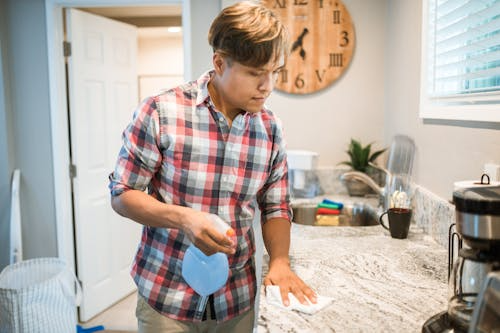
You wipe your countertops every day. It feels like enough. Still, over time, the shine fades, tiny scratches appear, and stains start to settle in. That slow damage usually comes from cleaning habits that seem harmless on the surface.
Most people do not ruin countertops in one big mistake. It happens through repeated small actions like using the wrong cleaner, letting water sit too long, or scrubbing harder than needed. These habits quietly wear down the surface until the damage becomes visible.
Good countertop care is not about doing more. It is about doing the right things consistently. When you understand how to clean properly and what to avoid, your countertops stay smooth, clean, and long-lasting without extra effort.
Why simple cleaning beats strong chemicals every time
Many people believe stronger cleaners mean better results. In reality, harsh products often strip away protective layers and dull the finish. Most countertops respond better to gentle cleaning done the right way.
Experts at DS Sales Associates often guide homeowners to start with mild solutions first. A mix of warm water and a few drops of dish soap removes everyday dirt without damaging the surface. This approach keeps the material intact while still delivering a clean result.
Using soft cloths instead of rough scrubbers also matters. A microfiber cloth lifts dirt without scratching, while aggressive pads can leave permanent marks. Even if scratches seem small at first, they build up and affect the overall appearance.
Quick care guide you can follow daily:
Do this:
- Use a soft microfiber cloth or sponge
- Wipe spills as soon as they happen
- Dry the surface after cleaning
- Stick to one gentle cleaner at a time
Avoid this:
- Strong chemical cleaners like bleach or ammonia
- Rough scrubbing pads or steel wool
- Letting water pool near seams or edges
- Mixing different cleaning products
Pro Tip: If your countertop looks cloudy after cleaning, it is often leftover residue. Wipe again with plain warm water and dry it fully to restore the natural finish.
Treat your countertop based on what it is made of
Not all countertops react the same way. Using one cleaning method for every surface can lead to slow and steady damage. Knowing your material helps you protect it better.
Granite and marble are natural stones that need gentle care. Acidic cleaners can weaken their surface and remove shine over time. Quartz is more durable, though heat and harsh chemicals can still cause issues.
Laminate is easy to clean, though it does not handle excess moisture well. Wood countertops need regular oiling to prevent drying and cracking. Each material has its own limits, and staying within those limits keeps it looking good.
Pro Tip: After cleaning, run your hand across the surface. A smooth, even feel means it is properly cleaned. If it feels sticky or uneven, there may be residue left behind that needs another quick wipe.
Matching your cleaning style to your countertop type is one of the easiest ways to avoid long-term damage.
Everyday habits that quietly extend countertop life
Daily habits have more impact than occasional deep cleaning. Small, consistent actions protect your countertops far better than heavy scrubbing once in a while.
Cleaning spills right away prevents liquids from soaking into the surface. This is important for materials that can absorb moisture. Drying after cleaning also keeps water spots and streaks from forming.
Using cutting boards instead of cutting directly on the surface protects against scratches. Placing hot cookware on trivets avoids heat marks and surface stress. These steps take seconds, though they protect your countertop for years. Keeping a clean cloth nearby makes a difference as well. When cleaning tools are easy to reach, quick wipe-downs happen naturally instead of being delayed.
Pro Tip: Build a habit of doing a quick wipe before leaving the kitchen or workspace. This keeps dirt from building up and makes deep cleaning easier later.
Hidden mistakes that slowly wear down the surface
Some countertop damage comes from habits that do not seem harmful at first. Over time, these actions weaken the surface and reduce its lifespan.
Dragging heavy appliances can leave scratches that are hard to fix. Letting grease or food residue sit too long can cause stains that settle into the material. Using too much water near the edges can lead to swelling or damage in certain surfaces.
Clutter also plays a role. When countertops are crowded, cleaning becomes uneven. Some areas get ignored, which leads to buildup and dull spots.
Quick check to stay on track:
- Keep surfaces clear for proper cleaning
- Lift objects instead of dragging them
- Clean grease and spills without delay
- Avoid soaking the surface with water
Pro Tip: Once a week, clear everything off your countertop and give it a full, even wipe. This resets the surface and prevents hidden buildup from becoming a bigger issue.
Smarter ways to deal with stains without overdoing it
Stains can be frustrating, though reacting too aggressively often makes them worse. The goal is to treat stains gently and correctly based on their type.
Start with mild soap and water. If the stain remains, move to a cleaner made for your specific surface. Avoid scrubbing too hard, as it can damage the finish and spread the stain further.
Simple stain approach:
- Oil stains respond well to a baking soda paste
- Water stains improve with gentle cleaning and proper drying
- Food stains lift with repeated light cleaning
Blotting works better than rubbing. It keeps the stain from spreading and helps lift it more effectively.
Pro Tip: The sooner you treat a stain, the easier it is to remove. Waiting gives it time to settle deeper into the surface.
Patience and the right method will always work better than force.
Keep your countertops looking new without extra effort
Long-term care is about consistency, not complexity. When you follow a simple routine, your countertops stay in great condition without demanding extra time. Natural stone may need sealing from time to time. Wood benefits from occasional oiling to maintain its texture. Quartz and laminate stay in good shape with gentle, regular cleaning.
Take a few moments every couple of weeks to check your countertops. Look for early signs like dull areas or minor stains. Fixing these early prevents bigger problems later. A clean countertop does more than improve appearance. It changes how your entire space feels. It looks organized, fresh, and well cared for.
If you treat your countertops with the same attention you give the rest of your home, they will hold their look for years. Clean smarter, stay consistent, and let your surfaces reflect the care you put into your space.